


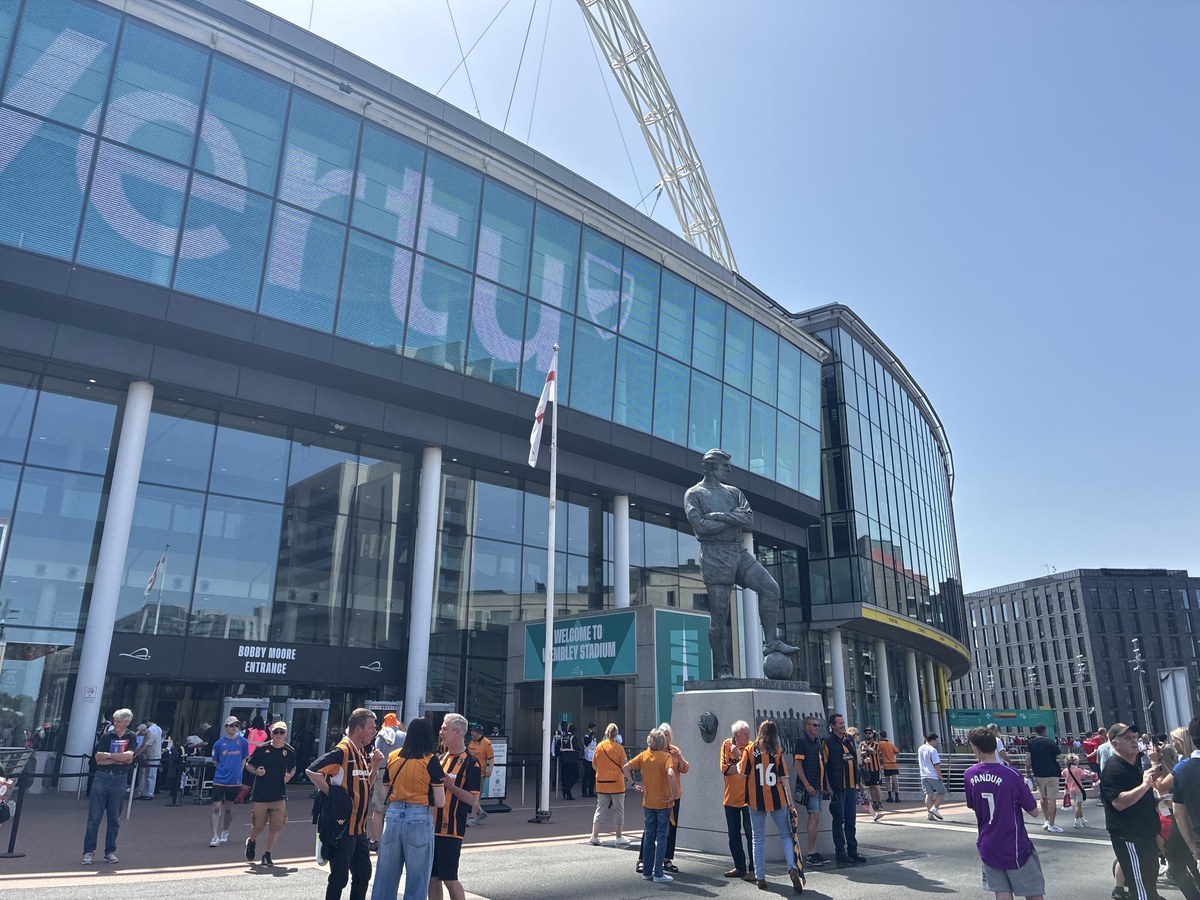
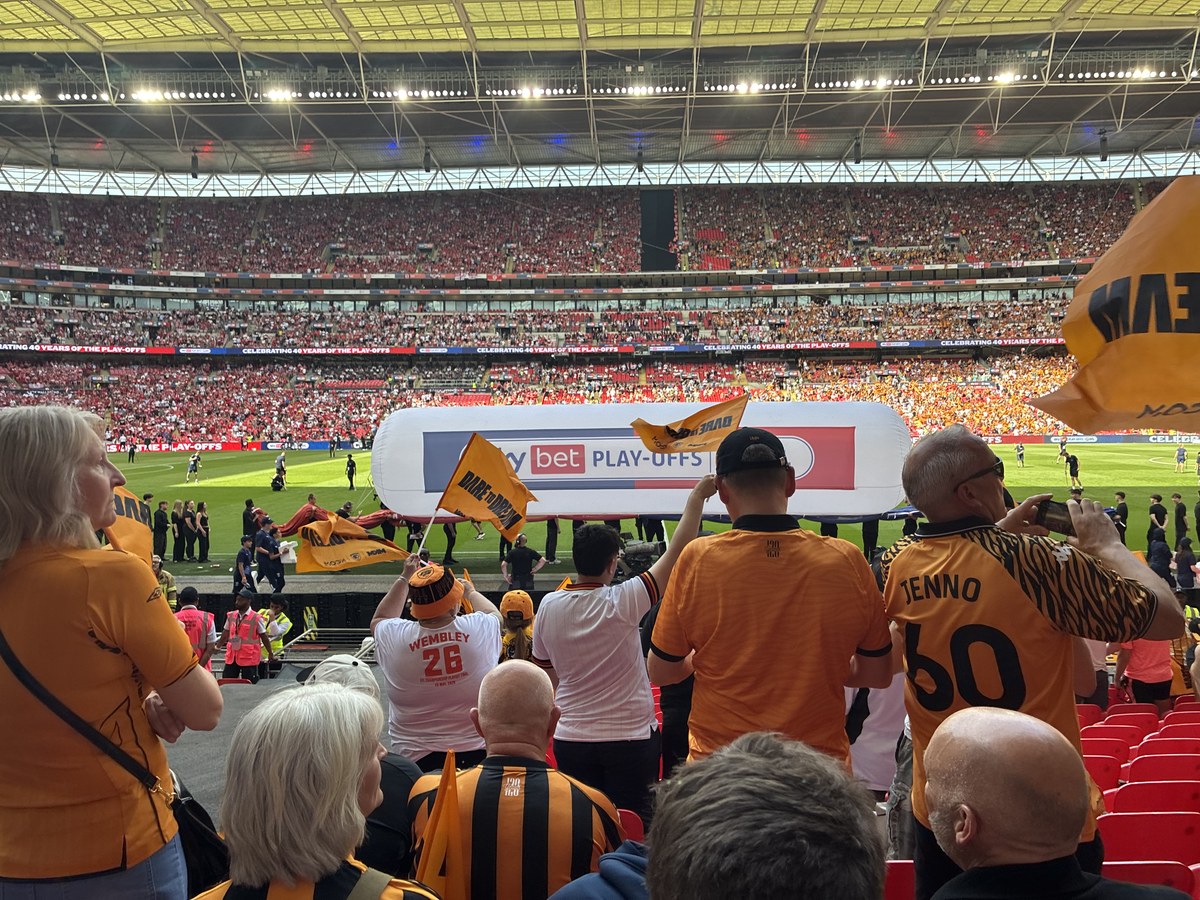
Oli McBurnie’s strike in the fifth minute of stoppage time, gifted by a Sol Brynn fumble on what should have been a routine clearance, secured Hull City a 1-0 victory over Middlesbrough in the Championship play-off final at Wembley and ended the club’s ten-year absence from the Premier League. On a boiling hot day in London, the match produced a stark statistical contradiction: Middlesbrough dominated possession with 68% and registered 13 shots, yet failed to direct a single effort on target. Hull, by contrast, had just 32% of the ball and two shots on goal, but one of them was the winner. It was McBurnie’s nineteenth goal of a season in which he was overlooked for Scotland’s World Cup squad four days before the final. The result was Hull’s third play-off final victory in three attempts and a perfect Wembley record under the arch. For Middlesbrough, it added another chapter of Wembley defeat — the club has still never won a match at the stadium.
How it unfolded
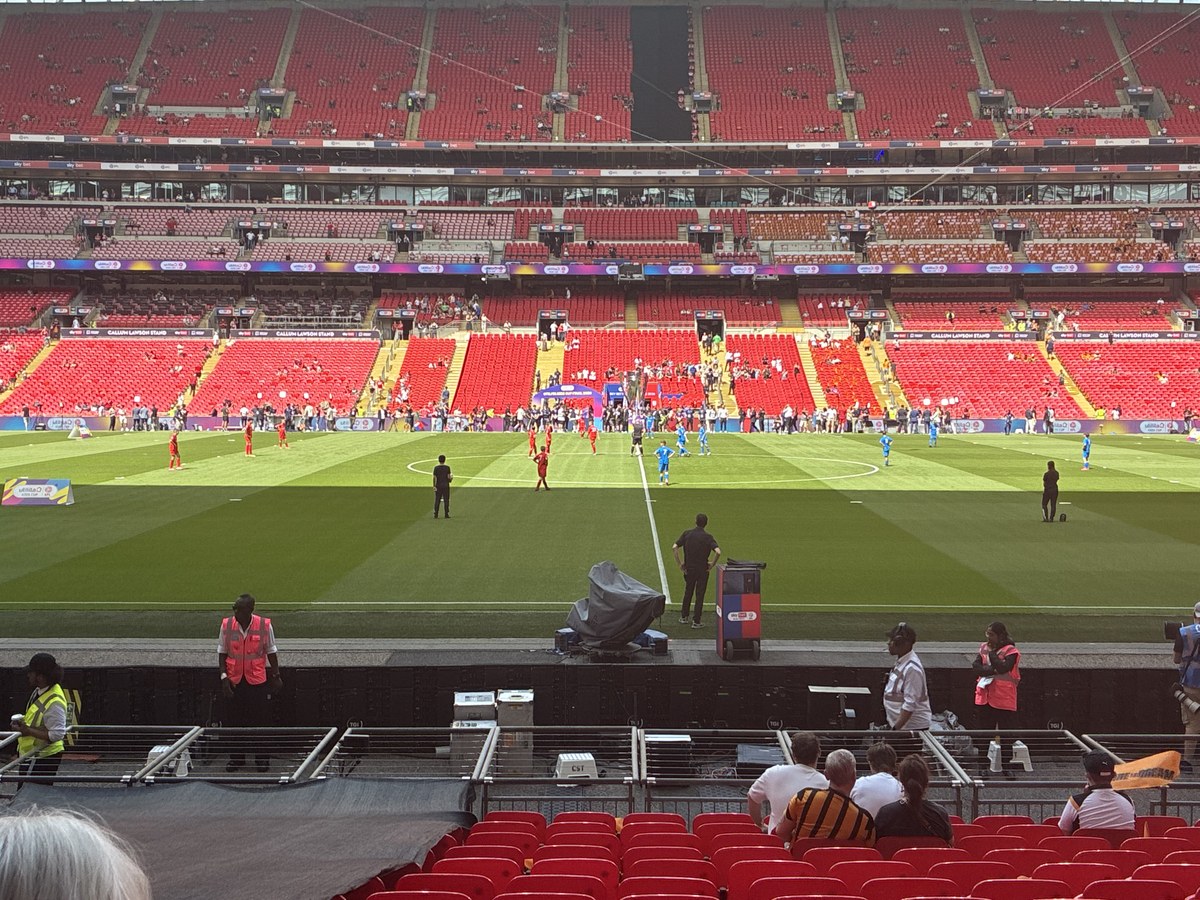
Hull set up in a compact 3-4-2-1, content to absorb pressure and hit on the counter. Middlesbrough, also in a 3-4-2-1, controlled the tempo from the outset, working the ball patiently through the thirds. The first half’s best chance fell to McBurnie, whose looping header struck the crossbar — the closest either side came before stoppage time. Hull made the first substitution on 63 minutes, introducing Joe Gelhardt for Liam Millar. Middlesbrough responded by bringing on Hayden Hackney, returning from a ten-game injury absence, for David Strelec on 70 minutes. The game looked headed for extra time as the clock ticked into the fifth minute of added time. Then, Brynn misjudged the ball, allowing McBurnie to pounce and finish. The striker was booked moments later, presumably for the manner of his celebration. The pre-match backdrop included the fallout from Southampton’s expulsion for spying — a saga that forced Hull to pivot their game plan in four days — and an incident in which Hull’s team bus, empty and en route to collect players from the Hilton at Wembley, had a window smashed by stones and bottles thrown by unidentified individuals. Sky Sports News’ Tim Thornton, reporting on camera at the team hotel, said: ‘On its way to pick up the players, some stones and bottles were thrown at the bus. There has been some damage, and they have had to knock out some of the glass on the exterior of the window.’
Key moments
McBurnie’s first-half header against the crossbar was the standout chance before the winner, a moment that hinted at his threat despite limited service. The decisive moment arrived in the 95th minute: Brynn’s error gifted McBurnie the opening, and the striker made no mistake. McBurnie was booked at 90+6, presumably for the manner of his celebration. Middlesbrough’s captain Hayden Hackney made his return from a ten-game absence as a 70th-minute substitute, but could not alter the outcome. The most telling statistic of the match was Middlesbrough’s shot profile: 13 attempts, zero on target. Despite 68% possession and 608 passes at 87% accuracy, they failed to test Hull goalkeeper Ivor Pandur even once. Hull’s xG of 0.89 was nearly identical to Middlesbrough’s 0.87, underscoring how finely the underlying numbers ran despite the possession gulf. Sergej Jakirovic threw on John Lundstram and Paul McNair in the dying seconds to see the game out.

The model versus the result
Two BTP models reached different conclusions about the final, and both turned out to be partly right. The logistic regression calibrated model gave Hull a 44.7% probability of winning, with Middlesbrough at 33.3% and the draw at 22.0%. That 11.4 percentage-point gap placed Hull firmly in the ‘favoured’ bracket, just shy of the 45% clear-favourite threshold. A narrow 1-0 scoreline does not retroactively make that probability tight; the favoured outcome simply arrived. The Poisson-with-Dixon-Coles goals model, by contrast, returned 37.6% Hull / 36.6% Boro / 25.7% draw with lambda values of 1.33 and 1.31 — a genuinely tight read on the match. The match-day xG split (0.89 vs 0.87) aligned with the goals model’s view of evenness, not the LR-cal’s lean. Both pictures had a claim on the truth: Hull were the more probable winner, and the match was tight at the level of chances created. The published API-default call (Hull 1-0) matched the result exactly; the conditional-modal scoreline, taking the argmax of the goals grid restricted to Hull-win cells, landed in the same place. A post-publish venue-symmetric correction — averaging probabilities with home and away swapped, mandatory on neutral-venue fixtures going forward — had flipped the call to Boro 1-0. That methodology debt has now been logged and will run pre-publish on every Wembley fixture from here on.
Promotion outlook
Hull return to the Premier League after a decade away, a remarkable turnaround given they finished 21st in the Championship last season, surviving on goal difference with a 1-1 draw at Portsmouth on the final day. Manager Sergej Jakirovic, appointed in the summer, has overseen a transformation built on a spine of experienced Championship campaigners: McBurnie, 19 goals in his first season at the club, and centre-back John Egan, with head of recruitment Martin Hodge piecing the squad together under a transfer embargo later reduced from three windows to two on appeal. Owner Acun Ilicali has already promised the players a trip to Las Vegas as a reward — Jakirovic has said he will skip Vegas for a quieter break with his family on the Croatian coast. For Middlesbrough, the pain is acute. Kim Hellberg, an unknown Swedish appointment after Rob Edwards left for Wolves three months into the season, took Boro to the top of the table by February before a run-in stumble dropped them to fifth. Reaching Wembley out of fifth-place after the Spygate reinstatement was already its own minor miracle; failing to convert 68% possession into a single shot on target is the kind of memory that will linger over the summer.